
BPC-157 for Gut Health: What Rats Have Shown, What Humans Have Not, and What Actually Treats Each Gut Problem
BPC-157 heals ulcers, colitis and fistulas in rats; in humans there is one unpublished 2005 trial and nothing since. Evidence by condition and approved options.
Written by Dr. Andrii Kaleniuk. Updated October 28, 2026.
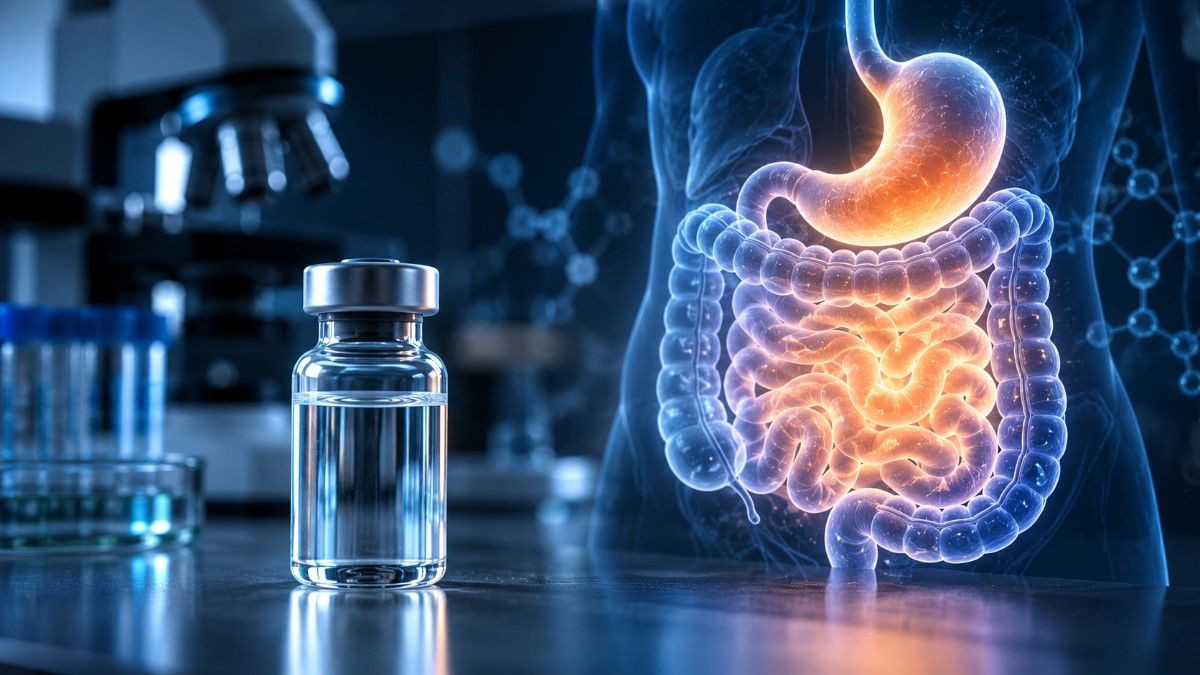
BPC-157 for gut health is the one use of the peptide where the animal evidence is deep rather than scattered, and the one where it comes closest to making biological sense: the molecule was isolated from human gastric juice, it is stable in stomach acid, and in rats it has healed ulcers caused by NSAIDs and alcohol, repaired inflamed colon, closed fistulas, protected the oesophagus from reflux and improved survival after massive bowel resection. That is also where the evidence stops. In humans there is one Phase II trial in ulcerative colitis from 2005 that was never published as a paper, a handful of Phase I safety studies, and no randomised trial of any gut condition since. Nothing sold today as BPC-157 is a medicine, the FDA considers it unapproved and has blocked its compounding, and the people buying it for 'leaky gut', IBS or Crohn's are treating conditions that have approved, tested therapies. This review sets out, condition by condition, what rats have shown and what humans have not, explains why the gut data do not transfer to the systemic claims, and lists the treatments that actually exist for each gut problem BPC-157 is marketed for.
BPC-157 for Gut Health: The Short Answer
- 1Animal evidence: strong and consistent across 30 years of rat studies, mostly from one Zagreb research group, for stomach ulcers, colitis, oesophageal damage, intestinal anastomoses, fistulas and short bowel.
- 2Human evidence: a 2005 Phase II trial in ulcerative colitis reported as a conference abstract, Phase I safety studies, and nothing since. No published randomised trial in any human gut disease.
- 3Plausibility: higher for the gut than for tendons or the brain, because an orally taken peptide reaches the gut lining directly even if it is poorly absorbed into the blood.
- 4Status: not approved anywhere; in April 2026 the FDA moved BPC-157 off its compounding list and in July 2026 an advisory committee voted narrowly to put it back, with no final decision yet. Prohibited in sport.
- 5The conditions it is sold for, IBS, 'leaky gut', Crohn's, ulcerative colitis, reflux, NSAID ulcers, all have approved therapies with human trial data.
- 6No dosing guidance exists for humans; the rat doses do not translate, and products sold online are untested for content.
Why the Gut Is Different From Every Other BPC-157 Claim
BPC-157 is a 15-amino-acid fragment of a protein found in gastric juice, first described by Predrag Sikiric's group in Zagreb in the early 1990s and named 'body protection compound' for its apparent ability to protect the stomach lining in rats. Two facts make the gut a special case. The peptide is unusually stable in gastric acid, surviving for hours where most peptides are broken down in minutes, which is why oral dosing in rats produces gut effects. And the gut lining is where an oral dose actually goes: whatever its systemic absorption, which has never been measured in humans, a swallowed peptide bathes the stomach, small intestine and colon directly. That is a far more plausible route to a local effect than the claim that a capsule heals a shoulder tendon. The oral absorption question, and why it matters for every non-gut claim, is covered in oral BPC-157. The flip side is that strong local gut data in rats say nothing about whether the peptide does anything once it enters the bloodstream, which is the basis of every other use.
What Rats Have Shown: Condition by Condition
The animal literature on BPC-157 and the gut is large, consistent and almost entirely from one group, which is both its strength and its limitation. The table lists the main models and what was found; nearly all used injected or drinking-water doses far above anything a capsule would deliver, and nearly all compared against untreated controls rather than against an existing drug.
BPC-157 in animal models of gut disease, and the human evidence for each
Stomach ulcers from NSAIDs, alcohol, stress
Rats: fewer and smaller lesions; protection against aspirin, indomethacin, diclofenac, ethanol and restraint-stress ulcers; also counteracts NSAID toxicity to liver and brain
None
Proton-pump inhibitors, H2 blockers, misoprostol; stopping the NSAID
Inflammatory bowel disease (colitis)
Rats: reduced inflammation and faster healing in chemically induced colitis; the 2005 Phase II used this rationale
One Phase II ulcerative colitis trial (PL-14736, 2005), abstract only, never published in full; no trial since
Mesalamine, steroids, thiopurines, biologics (anti-TNF, anti-integrin, anti-IL-23), JAK inhibitors
Oesophagitis and reflux
Rats: protected oesophageal lining after sphincter failure induced by NSAIDs or surgery; restored lower oesophageal sphincter pressure
None
PPIs, H2 blockers, lifestyle measures, fundoplication
Intestinal anastomosis (surgical join)
Rats: stronger joins, less leakage after colon-colon and oesophagus-stomach surgery
None
Surgical technique; no drug is approved to strengthen anastomoses
Fistulas (abnormal channels)
Rats: closure of gastrocutaneous, duodenocutaneous, colocutaneous and oesophagocutaneous fistulas
None
Surgery, biologics for Crohn's fistulas, seton drainage
Short bowel syndrome
Rats: better weight gain and adaptation after massive small-bowel resection
None
Teduglutide (a GLP-2 analogue), nutrition support
'Leaky gut' and IBS
No dedicated model; barrier effects inferred from colitis and NSAID studies
None
IBS: dietary therapy, antispasmodics, rifaximin, neuromodulators; 'leaky gut' is not a recognised diagnosis
The Only Human Gut Trial, and Why It Matters That It Was Never Published
In the early 2000s a Croatian company, Pliva, developed BPC-157 under the code PL-14736 and ran Phase I safety studies and a Phase II trial in ulcerative colitis. The Phase II result appeared as a conference abstract in 2005 and has been cited ever since as evidence that BPC-157 'passed human trials'. It did not, in the sense that matters: the full data, the dose, the comparator, the primary endpoint and the effect size were never published in a peer-reviewed journal, the programme was dropped, and no company has picked it up in the twenty years since. Pharmaceutical development is not sentimental; a peptide that showed a clear effect in colitis in 2005 would have been pursued, because ulcerative colitis drugs are among the most valuable in medicine. The most reasonable reading of silence is that the effect, if any, was not large enough to justify Phase III. The Phase I studies, by intravenous and rectal routes, found the peptide well tolerated at the doses used, which is useful as far as it goes and is the only human safety data that exists; it is discussed alongside the animal toxicology in BPC-157 side effects.
Why the Rat Data Do Not Settle the Question
- 1One laboratory: the great majority of positive gut studies come from the same Zagreb group. Independent replication, the basic test of any finding, is thin.
- 2Dose and route: rats received milligram-per-kilogram doses by injection or in drinking water, often continuously. A human swallowing a capsule of unknown content is not running the same experiment.
- 3Models, not diseases: a chemically induced colitis in a rat is not ulcerative colitis, which is an immune disease of years' duration. Many compounds heal induced colitis in rats and fail in people.
- 4No active comparator: the studies compare BPC-157 with nothing, not with a proton-pump inhibitor or mesalamine, so even a real effect may be smaller than what is already available.
- 5No human absorption data: whether and how much of an oral dose reaches the bloodstream or the colon wall in humans has never been measured.
What You Are Actually Buying
Because BPC-157 is not an approved drug and, since the FDA's April 2026 decision, cannot be legally compounded either, every product sold as BPC-157 for gut health falls into one of three categories: a 'research chemical' vial from a peptide vendor, a capsule marketed as a supplement in defiance of the rules on unapproved drugs, or a compounded product from a pharmacy that is ignoring the FDA. None are tested for content by any regulator, the FDA's own testing of similar peptide products has found wrong amounts and contaminants, and the 'arginate salt' capsules sold as better absorbed rest on patent claims and a rat study, not human data. The regulatory position, including the July 2026 advisory vote that could eventually reopen compounding, is tracked in is BPC-157 legal. The point for someone with a gut problem is simple: whatever the rats show, the thing in the bottle has not been shown to be BPC-157 at the stated dose, and no human dose for any gut condition has ever been established.
BPC-157 for gut health: claim vs evidence
Heals stomach ulcers
Animal only, strong
Rat models of NSAID and alcohol injury; no human trial; PPIs are proven
Treats ulcerative colitis or Crohn's
Animal strong; one unpublished human Phase II
No published human efficacy data; biologics and small molecules are proven
Fixes 'leaky gut'
Inferred, no direct model
'Leaky gut' is not a clinical diagnosis; no test, no trial
Helps IBS
None
No animal or human IBS study
Protects the gut from NSAIDs
Animal only, consistent
Plausible, untested in humans; misoprostol and PPIs do this with evidence
Oral capsules work for the gut
Plausible mechanism, no human data
Acid-stable and reaches the lining; absorption and effect unmeasured in humans
Safe for long-term gut use
Unknown
Phase I only; no long-term human data; angiogenic effects raise theoretical concerns
The Treatments That Do Exist
Each gut problem BPC-157 is sold for has therapies with human trial data, and the comparison is not close. NSAID-related ulcers respond to proton-pump inhibitors in a matter of weeks and are prevented by co-prescribing one; reflux has the same drugs plus surgery for refractory cases. Ulcerative colitis and Crohn's disease have a ladder of treatments from mesalamine through steroids to biologics and JAK inhibitors, with remission rates measured in thousands of patients. Short bowel syndrome has teduglutide, a GLP-2 analogue that increases absorption and has done in humans what BPC-157 has done in rats. IBS has dietary therapy, antispasmodics, rifaximin and gut-directed neuromodulators, each with randomised trials. A person with persistent gut symptoms who is weighing an unregulated peptide against these is not choosing between two options of unknown value; they are choosing between tested treatments and an untested one. Where BPC-157 might one day fit is as an adjunct, if a company ever runs the trial, and nothing in the current evidence says that day is close.
How This Compares With the Tendon and Injury Claims
It is worth being clear that the gut is BPC-157's best case, not its typical one. For tendon, ligament and muscle injury, the uses that dominate online discussion, the evidence is also rat-only but with a weaker mechanism, because a swallowed peptide must survive digestion, cross the gut wall, circulate and reach a tendon in meaningful amounts, none of which has been shown. The tendon claims are examined in BPC-157 for tendon recovery and BPC-157 for shoulder pain, and the combination products in BPC-157 vs TB-500 and the Wolverine stack. If someone is going to argue that BPC-157 does anything in humans, the gut is where the argument should start; that the argument has not been won even there is the most informative fact in this whole field.
When to Talk to Your Doctor
- 1If you have ongoing gut symptoms: bleeding, weight loss, persistent diarrhea, night pain or anaemia need a diagnosis, not a peptide; several of the conditions BPC-157 is sold for are serious
- 2If you have been diagnosed with IBD: stopping or delaying proven therapy for an untested one risks flares, hospitalisation and surgery
- 3If you take NSAIDs regularly and worry about your stomach: a proton-pump inhibitor or misoprostol has decades of evidence
- 4If you have already taken BPC-157: tell your clinician, because nothing is known about interactions, and report any adverse effect to the FDA MedWatch programme
- 5If you compete in tested sport: BPC-157 is prohibited and sold-as products have triggered sanctions
The Bottom Line
BPC-157 has healed just about every kind of gut injury that can be induced in a rat, which is more than can be said for most of its other claims, and the biology of an acid-stable peptide acting on the gut lining is not far-fetched. But thirty years on, the human evidence is one unpublished Phase II trial from 2005 and nothing since, the FDA regards it as an unapproved drug, no human dose exists, and the products sold are untested. Every gut condition it is marketed for has treatments that have passed the trials BPC-157 has not. For gut health, BPC-157 is an interesting rat result waiting for a company willing to test it in people; it is not a treatment.
FAQ
In rats, consistently: it heals NSAID and alcohol ulcers, induced colitis, oesophageal injury, surgical joins and fistulas. In humans, unknown: the only trial, a 2005 Phase II in ulcerative colitis, was never published in full, and no human gut trial has been run since.
'Leaky gut' is not a recognised diagnosis and there is no BPC-157 study of it in animals or humans. Barrier effects are inferred from rat colitis and ulcer models. No human evidence exists.
Not on current evidence. A pharmaceutical Phase II trial in ulcerative colitis in 2005 produced only a conference abstract and the programme was dropped. Approved therapies for IBD have remission data from thousands of patients; BPC-157 has none.
Oral is the more plausible route for a gut effect, because the peptide is acid-stable and reaches the gut lining directly; rat studies using drinking water matched injection for gut outcomes. No human study has compared routes or measured oral absorption.
It is not an approved drug anywhere. The FDA removed it from the list of substances eligible for compounding in April 2026; an advisory committee voted in July 2026 to recommend adding it back, but no final decision has been made. It is prohibited in sport under WADA rules.
That depends on the diagnosis, which is the point: ulcers and reflux have proton-pump inhibitors, IBD has mesalamine through biologics, short bowel has teduglutide, IBS has diet, antispasmodics and rifaximin. All have human trial data; BPC-157 has none.
Sources
- 1Sikiric P et al. Stable gastric pentadecapeptide BPC 157: novel therapy in gastrointestinal tract, Current Pharmaceutical Design, 2011
- 2Sikiric P et al. Brain-gut axis and pentadecapeptide BPC 157: theoretical and practical implications, Current Neuropharmacology, 2016
- 3Seiwerth S et al. BPC 157 and standard angiogenic growth factors: gastrointestinal tract healing, lessons from tendon, ligament, muscle and bone healing, Current Pharmaceutical Design, 2018
- 4Sikiric P et al. Stable gastric pentadecapeptide BPC 157 and intestinal anastomoses therapy in rats: a review, Pharmaceuticals, 2024
- 5Sikiric P et al. Fistulas healing: stable gastric pentadecapeptide BPC 157 therapy, Current Pharmaceutical Design, 2020
- 6Nonsteroidal anti-inflammatory drugs-induced failure of lower esophageal and pyloric sphincter and counteraction of sphincters failure with stable gastric pentadecapeptide BPC 157 in rats, Journal of Physiology and Pharmacology, 2017
- 7He L et al. Pharmacokinetics, distribution, metabolism and excretion of body-protective compound 157 in rats and dogs, Frontiers in Pharmacology, 2022
- 8Bulk drug substances nominated for use in compounding under Section 503A, U.S. Food and Drug Administration
- 9BPC-157: experimental peptide creates risk for athletes, U.S. Anti-Doping Agency
This review summarizes published animal and human research and regulatory records for general information. BPC-157 is not an approved treatment for any condition; gut symptoms should be evaluated by a clinician.

Dr. Andrii Kaleniuk
Author
Comments (0)
Be the first to comment on this article.
More articles
Oral BPC-157: Does Taking It by Mouth Work? Acid Stability, Rat Studies, the Arginate Claim and the Missing Human Data
October 26, 2026
Is BPC-157 Legal in 2026? FDA Status, the July Committee Vote, Sport Bans and the Rules by Country
October 25, 2026
CJC-1295 + Ipamorelin Side Effects: What Each Trial Found, What Users Report, and What the Stack Adds
October 24, 2026
