
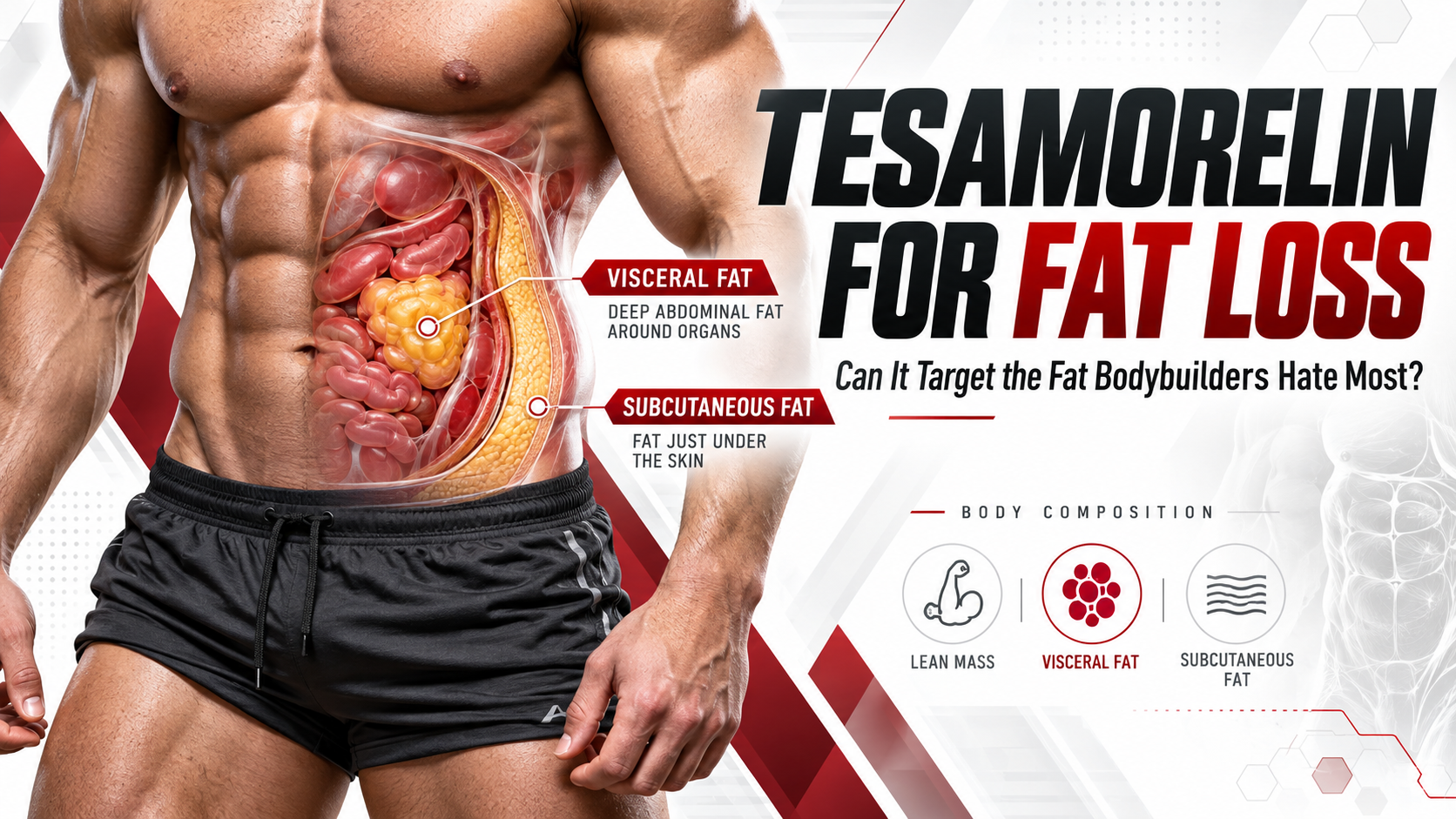
Tesamorelin for Fat Loss: Can It Target the Fat Bodybuilders Hate Most?
What if a peptide could reduce visceral belly fat by 15–20% without significant weight loss? That's the fascinating science behind Tesamorelin, an FDA-approved medication that has demonstrated impressive reductions in deep abdominal fat in human clinical trials. But there's a catch: the studies involved adults with HIV-associated lipodystrophy, not healthy bodybuilders, and the fat being reduced isn't necessarily the stubborn lower-belly fat hiding your abs. So can Tesamorelin really help create a leaner waist, improve body composition, or deliver the shredded look bodybuilders want? Let's examine the clinical results, visceral vs. subcutaneous fat, real-world limitations, side effects, and whether this peptide deserves its fat-loss reputation.
Tesamorelin for Fat Loss: Can It Target the Fat Bodybuilders Hate Most?
What if a peptide could reduce abdominal visceral fat by 15–20% without producing meaningful weight loss? That's not just a bodybuilding marketing claim. Tesamorelin has demonstrated substantial visceral fat reduction in controlled human trials. But there's a catch: the people studied weren't healthy bodybuilders, the fat being reduced isn't necessarily the stubborn belly fat you can pinch, and the results may disappear after treatment stops.
Imagine two athletes standing in front of a mirror. Both weigh 90 kilograms. Both train five days per week. Both want a leaner waist.
But their abdominal fat is distributed differently. One has a relatively thick layer of fat beneath the skin, covering the lower abs and creating visible love handles. The other has a larger amount of fat stored deep inside the abdominal cavity, around the internal organs.
To the casual observer, both might simply have belly fat. Biologically, however, these are two very different problems. And that's where Tesamorelin enters the conversation.
Unlike many research peptides promoted for fat loss, Tesamorelin has something unusual behind it: large randomized human trials demonstrating a measurable reduction in visceral adipose tissue.
In a pooled analysis involving 806 adults with HIV-associated abdominal fat accumulation, Tesamorelin produced an approximately 15.4% greater reduction in visceral fat compared with placebo over 26 weeks. That's a real clinical result.
But the same research found no significant reduction in abdominal subcutaneous fat. And the FDA-approved product label explicitly states that Tesamorelin is not indicated for weight loss management.
So how can a drug reduce belly fat without functioning as a conventional weight-loss medication? And could its unusual effects be useful for bodybuilders trying to sharpen their waistlines?
Let's explore the difference between visceral and subcutaneous fat, how Tesamorelin works, what the human studies actually found, and whether the results justify the bodybuilding hype.
What Is Visceral Fat—and Why Does It Matter?
Before discussing Tesamorelin, we need to understand the type of fat it has been shown to reduce. Not all abdominal fat is stored in the same place.
Some fat sits immediately beneath the skin. Other fat accumulates deeper inside the abdomen, around internal organs. That deeper fat is called visceral adipose tissue, usually abbreviated as VAT.
Visceral Fat vs. Subcutaneous Fat
- 1| Feature | Visceral fat (VAT) | Subcutaneous fat (SAT) |
- 2| Location | Deep inside the abdominal cavity | Directly beneath the skin |
- 3| Can you pinch it? | No | Yes |
- 4| Common appearance | May contribute to a larger, more protruding abdomen | Can create a soft belly, lower-ab fat, and love handles |
- 5| Physiological relevance | Strongly associated with cardiometabolic risk when excessive | Important energy-storage tissue; risk varies by amount and location |
- 6| Best direct measurement | CT or MRI | CT, MRI, and other body-composition methods |
- 7| Tesamorelin effect demonstrated in key trials | Significant reduction | No significant reduction |
This distinction changes the entire bodybuilding discussion. The fat hiding your lower abs is not necessarily the fat Tesamorelin has been proven to reduce.
Why Visceral Fat Is Different
Visceral fat surrounds structures such as the intestines and other abdominal organs. It is metabolically active and contributes to signaling involving inflammation, insulin sensitivity, and lipid metabolism.
Excess visceral fat is associated with increased cardiometabolic risk. Importantly, having excess visceral fat is not merely an aesthetic concern. It may matter even when total body weight doesn't appear especially high.
That makes it a legitimate medical research target.
Why Bodybuilders Care About It
Bodybuilders generally focus on visible outcomes:
- 1A smaller waist.
- 2More visible abdominal muscles.
- 3Better shoulder-to-waist proportions.
- 4Improved definition during cutting.
- 5A tighter-looking midsection on stage or in photographs.
But not every improvement in visceral fat translates directly into those visual changes. Someone whose main issue is subcutaneous lower-ab fat may see little benefit from a treatment that primarily changes visceral fat.
And abdominal appearance can also be influenced by bloating, posture, abdominal musculature, gastrointestinal conditions, and other factors. That's why distinguishing fat compartments is essential.
What Is Tesamorelin?
Tesamorelin is a synthetic analogue of growth hormone-releasing hormone, or GHRH. GHRH is produced by the hypothalamus and helps regulate growth hormone release from the pituitary gland.
Tesamorelin stimulates this pathway, increasing endogenous GH secretion and downstream IGF-1 signaling. Its clinical development has focused particularly on reducing excess abdominal fat in adults with HIV-associated lipodystrophy.
The Important Difference From Most Bodybuilding Peptides
Tesamorelin isn't simply an experimental compound with promising laboratory results. It is the active ingredient in FDA-approved prescription medications, including EGRIFTA WR.
That approval is specific. According to the U.S. prescribing information, EGRIFTA WR is indicated for reducing excess abdominal fat in adults with HIV and lipodystrophy.
It is not approved as a general weight-loss medication. It is not approved for healthy bodybuilders who want a smaller waist. And it is not an established treatment for removing love handles or revealing abdominal muscles.
Tesamorelin at a Glance
- 1| Characteristic | Tesamorelin |
- 2| Compound type | GHRH analogue |
- 3| Main biological target | GH/IGF-1 axis |
- 4| Clinically demonstrated effect | Reduction in excess visceral abdominal fat in adults with HIV-associated lipodystrophy |
- 5| FDA-approved product | EGRIFTA WR |
- 6| Approved for general weight loss | No |
- 7| Proven to reduce subcutaneous belly fat | No |
- 8| Proven for healthy bodybuilders | No |
- 9| Long-term cardiovascular safety | Not established |
- 10| WADA status | Prohibited |
This makes Tesamorelin a particularly interesting peptide to investigate. The evidence for one specific effect is substantially stronger than the evidence for many other bodybuilding-related peptides.
But the proven medical indication is also much narrower than the marketing claims.
How Does Tesamorelin Work?
Tesamorelin stimulates the growth hormone-releasing hormone receptor in the pituitary gland. This increases endogenous growth hormone secretion.
Growth hormone then affects multiple tissues and metabolic processes, including pathways associated with lipid metabolism. GH also stimulates production of insulin-like growth factor 1, or IGF-1.
The Tesamorelin Pathway
- 1Tesamorelin activates the GHRH receptor.
- 2The pituitary gland increases GH secretion.
- 3GH influences metabolism in different tissues.
- 4Circulating IGF-1 concentrations increase.
- 5In the studied population, visceral adipose tissue decreases during treatment.
This is not the same as Tesamorelin physically traveling to the abdomen and selectively destroying fat cells. Its effects are mediated through systemic hormonal signaling.
The precise mechanisms underlying the preferential changes in visceral fat are complex.
Why Not Just Call It a Fat Burner?
Because the term fat burner is too broad. Conventional weight-loss discussions usually focus on total weight, total fat mass, calorie balance, and changes in appetite or energy expenditure.
Tesamorelin's defining clinical outcome is more specific. It changes where fat is stored and how much visceral fat is present, without reliably producing meaningful weight loss.
That's an important distinction. And the clinical data illustrate it remarkably well.
The Landmark 2007 Trial: Visceral Fat Fell by 15.2%
One of the major Tesamorelin studies was published in The New England Journal of Medicine in 2007.
Researchers investigated the compound in 412 adults with HIV-associated abdominal fat accumulation. Participants were randomly assigned to receive Tesamorelin or placebo for 26 weeks.
The primary outcome was the change in visceral adipose tissue measured using computed tomography.
This matters because the investigators did not simply rely on body weight, waist measurements, or visual appearance. They directly assessed the abdominal fat compartment of interest.
What Did Researchers Find?
At 26 weeks:
- 1| Outcome | Tesamorelin | Placebo |
- 2| Change in visceral adipose tissue | −15.2% | +5.0% |
- 3| Change in triglycerides | −50 mg/dL | +9 mg/dL |
- 4| Change in total cholesterol/HDL ratio | −0.31 | +0.21 |
- 5| Change in circulating IGF-1 | +81.0% | −5.0% |
The differences in these reported outcomes were statistically significant. The visceral fat finding is especially important.
Tesamorelin reduced VAT by 15.2% from baseline, while the placebo group experienced a 5.0% increase. That is a 20.2-percentage-point difference in change between groups.
In other words, Tesamorelin did more than simply elevate growth hormone. It produced a measurable body-composition effect in the patient population being studied.
Did Participants Lose 15.2% of Their Body Weight?
No. And this is one of the most important distinctions in the article. A 15.2% reduction in visceral fat does not mean:
- 1A 15.2% reduction in total body weight.
- 2A 15.2% reduction in total body-fat percentage.
- 3A 15.2% reduction in waist circumference.
- 4A 15.2% reduction in the thickness of fat covering the abs.
The outcome was the measured visceral fat compartment. That's a clinically meaningful result, but it shouldn't be transformed into a dramatic whole-body fat-loss claim.
The 2010 Pooled Analysis: 806 Patients and a Clearer Picture
A larger pooled analysis published in 2010 combined data from two randomized, double-blind, placebo-controlled Phase 3 trials.
The investigators included 806 adults receiving antiretroviral therapy who had HIV-associated excess abdominal fat.
- 1543 were assigned to Tesamorelin.
- 2263 were assigned to placebo.
The primary phase lasted 26 weeks. Afterward, participants entered a 26-week extension designed to investigate continued treatment and what happened after discontinuation.
The Main Result: Approximately 15.4% Less Visceral Fat Relative to Placebo
At week 26, the pooled analysis reported:
- 1| Measurement | Tesamorelin | Placebo |
- 2| Mean change in visceral fat area | −24 cm² | +2 cm² |
- 3| Mean change in abdominal subcutaneous fat area | −2 cm² | +2 cm² |
- 4| Mean change in triglycerides | −37 mg/dL | +6 mg/dL |
- 5| Mean change in IGF-1 | +108 ng/mL | −7 ng/mL |
The reported treatment effect on visceral fat was approximately −15.4%. The visceral fat reduction was statistically significant.
But the change in abdominal subcutaneous fat was not. That contrast is the central finding for bodybuilders.
The Study Demonstrated a Fat-Compartment Difference
Researchers observed a meaningful reduction in deep abdominal fat. They did not observe a comparable reduction in the fat directly beneath the abdominal skin.
This makes Tesamorelin different from a treatment that simply causes generalized weight loss. But it also limits its relevance for people whose main cosmetic concern is pinchable lower-ab fat.
What Does a 24 cm² Reduction Mean?
The clinical trials quantified visceral fat using abdominal CT imaging. A result expressed in square centimeters refers to a measured cross-sectional area.
It is not a direct measurement of kilograms of fat lost. So it's incorrect to convert the study's 24 cm² reduction into a specific number of kilograms without additional data.
The important finding is that the abdominal visceral fat compartment became measurably smaller. That's real evidence—but for a very specific outcome in a very specific patient population.
The Two Phase 3 Trials: What Did the FDA Data Show?
The FDA prescribing information provides an even clearer view of the individual trial results. Both pivotal studies measured VAT at 26 weeks.
Visceral Fat Results
- 1| Outcome | Study 1: Tesamorelin | Study 1: Placebo | Study 2: Tesamorelin | Study 2: Placebo |
- 2| Mean baseline VAT | 178 cm² | 171 cm² | 186 cm² | 195 cm² |
- 3| Mean VAT change | −27 cm² | +4 cm² | −21 cm² | Approximately 0 cm² |
- 4| Mean percentage change | −18% | +2% | −14% | −2% |
Both studies supported a clinically measurable reduction in visceral fat. In Study 1, the treatment difference was approximately −20%. In Study 2, the treatment difference was approximately −12%.
That is why a headline describing roughly 14–18% visceral fat reduction during treatment is consistent with the pivotal clinical data.
What Happened to Waist Circumference?
The changes were noticeably smaller.
- 1Study 1: Tesamorelin group approximately −3 cm; placebo group approximately −1 cm.
- 2Study 2: Tesamorelin group approximately −2 cm; placebo group approximately −1 cm.
So although the change in visceral fat was substantial, the additional waist reduction relative to placebo was approximately 1–2 centimeters.
That is meaningful for interpreting the real-world appearance changes. A large percentage reduction in a deep fat compartment does not necessarily produce an equally dramatic visual transformation.
What Happened to Body Weight?
This is where Tesamorelin becomes particularly interesting. The FDA clinical data show very little difference in body-weight change.
In Study 1, the mean weight change was approximately −0.4 kg with Tesamorelin and 0.0 kg with placebo. In Study 2, the mean change was approximately +0.5 kg with Tesamorelin and +0.3 kg with placebo.
The treatment differences were small. This is why the FDA label describes the drug as weight-neutral and explicitly states that it is not indicated for weight-loss management.
Tesamorelin can meaningfully alter visceral fat without meaningfully changing the number on the scale. That's one of its most distinctive clinical characteristics.
Does Tesamorelin Reduce the Stubborn Lower-Belly Fat Bodybuilders Hate?
Here's the question that matters most for its bodybuilding reputation. Imagine someone who is already relatively lean.
They have visible upper abs. Their shoulders and arms are well-defined. But they still carry a thin layer of fat around the lower abdomen.
Would Tesamorelin target that specific problem? The evidence says we shouldn't assume so.
Why Lower-Ab Fat Is a Different Problem
The lower abdominal fat that you can grab between your fingers is primarily subcutaneous fat. The pivotal Tesamorelin studies found no significant reduction in abdominal subcutaneous fat.
That's a critical limitation. Tesamorelin has demonstrated preferential effects on VAT in the studied population. It has not been proven to remove stubborn subcutaneous abdominal fat in otherwise healthy bodybuilders.
What About Love Handles?
Love handles are largely associated with subcutaneous fat around the waist and flanks. There is no convincing controlled human evidence that Tesamorelin selectively removes that fat.
What About a Protruding Midsection?
This is more complicated. In some people, excess visceral fat can contribute to abdominal protrusion. But a protruding abdomen is not automatically evidence of excess VAT.
Other factors can affect abdominal shape, including gastrointestinal distension, posture, abdominal wall characteristics, and other medical issues.
A person's appearance alone cannot accurately identify how much visceral fat they have.
The Real Bodybuilding Distinction
- 1| Bodybuilding goal | What the evidence supports |
- 2| Reducing excess visceral fat in adults with HIV-associated lipodystrophy | Demonstrated |
- 3| Reducing pinchable lower-ab fat | Not demonstrated |
- 4| Removing love handles | Not demonstrated |
- 5| Achieving sharper abdominal definition | Not established |
- 6| Producing dramatic scale-weight loss | Not supported |
- 7| Improving stage-conditioning outcomes in healthy bodybuilders | Not established |
The peptide may affect an important internal fat compartment. But that doesn't automatically make it an ideal tool for cosmetic cutting.
Could Tesamorelin Improve Body Composition Without Increasing Muscle Growth?
The pivotal trials reported an increase in measured lean body mass. That sounds interesting from a bodybuilding perspective.
According to the FDA label, mean lean body mass increased by approximately:
- 11.3 kg in Study 1.
- 21.2 kg in Study 2.
The placebo groups showed little change or a slight decrease. At first glance, that might sound like evidence for an anabolic effect.
But there's a crucial limitation. Lean body mass is not identical to newly developed skeletal muscle. It includes water and other nonfat tissues.
Growth hormone-related interventions can affect fluid balance. Therefore, an increase in measured lean body mass cannot automatically be classified as additional contractile muscle.
The trials were not designed to establish increased bodybuilding hypertrophy or maximal strength. They did not demonstrate that Tesamorelin produced larger muscle fibers or improved one-repetition maximum performance in trained athletes.
This creates an important distinction: Tesamorelin has clinically demonstrated effects on visceral fat. It has not clinically demonstrated the muscle-growth benefits sometimes attached to its GH-related mechanism.
Tesamorelin and Liver Fat: The 2014 Human Trial
Visceral fat isn't the only internal fat compartment researchers have investigated. Another important area is fat accumulating in the liver.
This is not identical to VAT. Visceral fat is stored around abdominal organs. Liver fat refers to triglyceride accumulation inside liver cells.
Both can be associated with metabolic dysfunction, but they are distinct measurements.
A 2014 randomized clinical trial published in JAMA investigated Tesamorelin in 50 adults with HIV-associated abdominal fat accumulation.
Participants were assigned to Tesamorelin or placebo for six months. Researchers measured VAT and liver fat.
What Did They Find?
The study reported:
- 1| Outcome | Tesamorelin | Placebo |
- 2| Mean VAT change | −34 cm² | +8 cm² |
- 3| Mean percentage VAT change | −9.9% | +6.6% |
- 4| Median liver fat change, lipid-to-water percentage | −2.0 percentage points | +0.9 percentage points |
The net VAT treatment effect was approximately −16.6%. The difference in visceral fat was statistically significant.
The reduction in liver fat was also statistically significant. Meanwhile, the change in abdominal subcutaneous adipose tissue was not significant.
Why This Study Matters
It reinforces the idea that Tesamorelin's clinical effects are not simply about shrinking the visible layer of abdominal fat. Researchers observed changes in metabolically relevant internal fat compartments.
However, the findings were preliminary. The trial involved a small, medically specific population.
It did not establish that Tesamorelin improves liver health or cardiovascular outcomes in healthy bodybuilders.
And improvements in imaging biomarkers do not automatically establish reductions in heart attacks, diabetes complications, or mortality. Those outcomes require their own evidence.
The 2019 Trial: Liver Fat Fell by 37% Relative to Placebo
In 2019, researchers published a randomized, double-blind, multicenter trial in The Lancet HIV.
The study enrolled 61 adults with HIV and nonalcoholic fatty liver disease, the terminology used in the original publication.
Participants received Tesamorelin or placebo for 12 months. The primary outcome was change in liver fat measured using magnetic resonance spectroscopy.
The Main Findings
Researchers reported that Tesamorelin produced:
- 1An approximately 37% greater relative reduction in liver fat compared with placebo.
- 2An absolute between-group treatment effect of approximately −4.1 percentage points in hepatic fat fraction.
- 3A liver fat fraction below 5% in 35% of Tesamorelin-treated participants, compared with 4% receiving placebo.
The investigators also examined liver histology.
Among participants with paired biopsy information, fibrosis progression occurred in approximately:
- 110.5% of the Tesamorelin group.
- 237.5% of the placebo group.
The difference was statistically significant in this small study. However, Tesamorelin did not demonstrate significant improvement of existing fibrosis.
The Important Caveat
These findings are promising within the research setting. But the study was relatively small, and it involved patients with HIV-associated liver disease.
The results do not establish Tesamorelin as an approved treatment for fatty liver disease in the general population. And they certainly do not establish it as a cutting drug for competitive bodybuilders.
Still, this research helps explain why Tesamorelin has attracted serious interest in metabolic medicine. Its effects involve more than a temporary change on the scale.
What Happens When You Stop Tesamorelin?
This is one of the most important questions for anyone imagining a short cutting cycle.
The pivotal trials included extension phases in which some participants continued Tesamorelin while others stopped active treatment and received placebo.
Those studies revealed a major limitation. Visceral fat reductions were not reliably maintained after treatment stopped.
The 52-Week Extension Results
Participants who continued Tesamorelin generally maintained their reductions in visceral fat.
In the pooled analysis, those continuing treatment showed an approximately 17.5% reduction from their original baseline after 52 weeks.
But participants who switched from Tesamorelin to placebo experienced reaccumulation of visceral fat.
The FDA label provides a striking comparison during the second 26-week period.
- 1Study 1: Participants continuing Tesamorelin had approximately 0% VAT change from their week-26 level; participants switching to placebo experienced approximately 22% VAT reaccumulation over that period.
- 2Study 2: Participants continuing Tesamorelin had approximately −5% additional VAT change; participants switching to placebo experienced approximately 16% VAT reaccumulation.
These are changes during the extension period, not percentages of total body weight.
Why This Matters for Bodybuilders
A popular cutting strategy is to use an intervention temporarily and then maintain the result. But the clinical evidence raises doubts about assuming that a short course of Tesamorelin produces permanent fat redistribution.
The observed benefit was largely treatment-dependent. That doesn't mean every individual will return to exactly the same visceral fat level after discontinuation.
But it does mean sustained results cannot be assumed. And when long-term treatment is being considered, long-term safety becomes an especially important part of the conversation.
Why Tesamorelin Is Not Just Another Weight-Loss Peptide
Peptides are frequently discussed as though they all belong in the same fat-loss category. But that approach can be misleading.
Tesamorelin is not a GLP-1 receptor agonist. It is not designed around the same primary mechanism as medications such as semaglutide or tirzepatide.
Its clinically demonstrated effect is more specific.
Different Mechanisms, Different Outcomes
- 1| Category | Tesamorelin | GLP-1-based weight-management treatments |
- 2| Primary pathway | GHRH/GH/IGF-1 axis | Incretin-related signaling |
- 3| Primary established clinical outcome | Reduction of excess abdominal fat in adults with HIV-associated lipodystrophy | Weight reduction in indicated patient populations |
- 4| Weight loss as an approved indication | No | Yes, for certain approved products |
- 5| Effect on appetite | Not its established primary therapeutic mechanism | Appetite and food-intake regulation are central |
- 6| Evidence in healthy bodybuilders | Not established | Athletic and physique-specific outcomes should not be assumed from obesity trials |
- 7| Long-term cardiovascular outcomes | Not established for Tesamorelin | Depend on the specific drug and studied population |
This comparison is not a recommendation to substitute one medication for another. It illustrates why the phrase fat-loss peptide is too vague to describe meaningful differences in pharmacology.
A treatment that reduces visceral fat without substantial weight loss is not interchangeable with a treatment designed to produce significant weight reduction.
Can Tesamorelin Improve Insulin Sensitivity or Metabolic Health?
This is where the evidence becomes more complicated. Excess visceral fat is associated with metabolic dysfunction. Therefore, reducing visceral fat might be expected to improve some metabolic markers.
And some Tesamorelin studies have observed improvements in triglycerides and other lipid measurements. But stimulating the GH axis can also affect glucose regulation.
These two effects need to be considered together.
What Happened to Triglycerides?
In the 2010 pooled analysis:
- 1Triglycerides fell approximately 37 mg/dL in the Tesamorelin group.
- 2Triglycerides rose approximately 6 mg/dL in the placebo group.
That difference was statistically significant.
What Happened to Glucose?
Some individual trials and analyses did not find clinically meaningful average differences in glucose parameters over the observed periods.
For example, the 2019 liver-fat trial did not detect significant between-group changes in fasting glucose or HbA1c at 12 months.
But that is not the entire safety picture. The FDA prescribing information includes a warning about glucose intolerance and diabetes.
In the pivotal clinical trial program:
- 15% of Tesamorelin-treated participants developed an HbA1c level of at least 6.5%.
- 21% of placebo-treated participants reached that threshold.
The label reports a hazard ratio of approximately 3.3, with a confidence interval of 1.4–9.6.
Why These Findings Aren't Necessarily Contradictory
A treatment can improve visceral fat or triglyceride measurements while also increasing the risk of a particular adverse metabolic outcome.
Average group-level glucose changes may appear small even if a subset of patients experiences clinically significant deterioration.
That's why it would be misleading to describe Tesamorelin as proven to improve glucose control. It would also be misleading to ignore the favorable visceral-fat findings.
The evidence supports a more careful conclusion: Tesamorelin has demonstrated reductions in visceral fat and improvements in some lipid outcomes, but it also carries a documented risk of glucose intolerance and diabetes. Both facts matter.
Potential Side Effects and Safety Risks of Tesamorelin
Tesamorelin has more clinical research than many experimental bodybuilding peptides. That is an advantage for evaluating its effects. But it does not mean its risks are negligible.
The FDA label includes important contraindications, warnings, and adverse reactions.
1. Elevated IGF-1
Tesamorelin increases GH secretion, which can increase circulating IGF-1. In the clinical trial program, elevated IGF-1 concentrations were common.
After 26 weeks:
- 1Approximately 47% of treated participants had IGF-1 levels more than two standard deviation scores above the reference mean.
- 2Approximately 36% had levels more than three standard deviation scores above the reference mean.
The long-term consequences of persistent IGF-1 elevation are not fully established.
The FDA label specifically recommends monitoring IGF-1 during prescribed treatment and considering discontinuation in patients with persistent significant elevations.
2. Glucose Intolerance and Diabetes
As discussed above, the prescribing information reports an increased risk of developing diabetes. This is a particularly important issue for individuals with existing metabolic risk factors.
A medication that improves one aspect of body composition should not automatically be assumed to improve every aspect of metabolic health.
3. Fluid Retention and Musculoskeletal Symptoms
The FDA label identifies adverse effects associated with fluid retention and GH-related activity. These include:
- 1Peripheral edema.
- 2Joint pain.
- 3Pain in the extremities.
- 4Muscle pain.
- 5Carpal tunnel syndrome.
These symptoms are especially relevant to athletes who already place substantial mechanical demands on their joints and connective tissues.
4. Injection-Site Reactions
Tesamorelin is an injectable prescription medication. Clinical trials documented injection-site reactions, including redness, itching, pain, and swelling.
In the pooled 26-week safety data, injection-site reactions occurred in approximately:
- 117% of treated participants.
- 26% of placebo participants.
5. Hypersensitivity and Immune Responses
Hypersensitivity reactions have occurred during clinical trials. The prescribing information also describes anti-Tesamorelin antibodies observed in treated patients.
The presence of antibodies does not automatically mean a participant develops clinical illness. But it illustrates why repeated peptide exposure requires appropriate pharmaceutical safety evaluation.
6. Malignancy-Related Precautions
Tesamorelin stimulates the GH/IGF-1 axis, which participates in growth-related signaling. The FDA label lists active malignancy as a contraindication.
The label also recommends careful evaluation in people with a history of malignancy.
This should not be misrepresented as proof that Tesamorelin causes cancer in healthy users. The appropriate point is that growth-related hormonal signaling creates legitimate clinical concerns requiring medical assessment.
7. Other Contraindications
The prescribing information also identifies contraindications involving:
- 1Disruption of the hypothalamic-pituitary axis.
- 2Known hypersensitivity to Tesamorelin or its formulation components.
- 3Pregnancy.
Tesamorelin should not be viewed as a casual physique-enhancement supplement. It is a prescription medicine with defined indications and important safety limitations.
8. Unknown Long-Term Cardiovascular Outcomes
The FDA label explicitly states that long-term cardiovascular safety has not been established.
This matters because reducing a cardiovascular risk marker does not necessarily mean that an intervention reduces cardiovascular events.
To demonstrate that benefit, researchers would need appropriate studies measuring outcomes such as heart attacks, strokes, or cardiovascular mortality.
A smaller VAT measurement is encouraging. But it is not a substitute for that evidence.
Is Tesamorelin FDA-Approved for Fat Loss?
Yes, but only for a specific medical indication. The distinction is essential.
Tesamorelin is FDA-approved for reducing excess abdominal fat in adults with HIV-associated lipodystrophy.
It is not FDA-approved for general obesity treatment. It is not FDA-approved for healthy people seeking cosmetic fat loss. And it is not approved for bodybuilding cutting cycles.
What About EGRIFTA WR and EGRIFTA SV?
There are different prescription formulations of Tesamorelin.
The FDA labeling specifically warns that EGRIFTA WR and EGRIFTA SV have differences in formulation and administration requirements and are not substitutable.
The major older clinical trials investigated an earlier Tesamorelin formulation.
The approval of EGRIFTA WR was supported by the established clinical efficacy evidence together with a demonstration of comparable bioavailability.
The trial results discussed in this article should not be interpreted as a do-it-yourself dosing guide. Different products and formulations cannot be treated as interchangeable simply because they contain Tesamorelin.
Is Tesamorelin Banned in Tested Bodybuilding?
Yes. The 2026 World Anti-Doping Agency Prohibited List explicitly identifies Tesamorelin among GHRH analogues.
It appears within the category of growth hormone-releasing factors. The relevant prohibition applies at all times, including outside competition.
This matters for athletes competing in tested bodybuilding organizations that follow WADA-based anti-doping rules.
The fact that Tesamorelin is an FDA-approved prescription drug for a particular condition does not make it automatically permitted in sport. Medical approval and anti-doping eligibility are separate questions.
Does the Evidence Apply to Healthy Bodybuilders?
This is the biggest limitation in the entire discussion. The strongest Tesamorelin trials investigated adults with HIV-associated lipodystrophy and excess abdominal fat.
That population differs significantly from healthy resistance-trained athletes.
Why the Study Population Matters
HIV-associated lipodystrophy can involve abnormal body-fat distribution and complex metabolic changes.
The individuals enrolled in the pivotal studies had excess abdominal fat and were receiving antiretroviral therapy.
Their physiology, baseline body composition, and medical circumstances may differ from those of a healthy bodybuilder preparing for a competition.
A drug's effect in one population cannot automatically be generalized to another.
What About Already-Lean Athletes?
A relatively lean bodybuilder may have much less visceral fat to lose. Their visible abdominal fat may be mostly subcutaneous.
The magnitude of Tesamorelin's effects in someone with little excess VAT is not established. Nor do the clinical studies demonstrate that Tesamorelin improves contest conditioning or abdominal definition.
What About Off-Season Bodybuilders?
An off-season athlete may have more total abdominal fat than during a contest-preparation phase. But that doesn't establish whether the additional fat is visceral or subcutaneous.
Nor does it establish that Tesamorelin produces a favorable risk-benefit balance in that individual. The clinical evidence simply does not answer that question.
Tesamorelin's proven effect on visceral fat is real. Its usefulness for bodybuilding aesthetics remains unproven.
Can You Tell Whether You Have Too Much Visceral Fat?
Not reliably from a mirror. Abdominal appearance provides clues, but it cannot precisely identify internal fat distribution.
Common Assessment Methods
- 1| Method | What it can tell you | Main limitation |
- 2| Waist circumference | General abdominal-size trend | Cannot separate visceral from subcutaneous fat |
- 3| Waist-to-height ratio | Useful indicator of central adiposity risk | Does not directly quantify VAT |
- 4| DXA body-composition scan | Can estimate body composition and, with some systems, visceral fat | VAT estimates vary by device and method |
- 5| MRI | Can assess abdominal fat compartments | Cost and availability |
- 6| CT scan | Can directly quantify abdominal fat distribution | Involves ionizing radiation |
- 7| Mirror photographs | Helpful for aesthetic progress | Cannot identify deep abdominal fat accurately |
The pivotal Tesamorelin studies used CT measurements. They did not rely on visual estimates of how lean participants looked.
That's why the results are meaningful from a clinical research perspective.
For an individual concerned about cardiometabolic risk, assessment should be based on overall health and appropriate clinical evaluation rather than an assumption that stubborn abdominal fat must be visceral.
What Has Better Evidence for Reducing Visceral Fat?
Here's the less exciting—but more practically useful—part of the story. Visceral fat can respond to lifestyle interventions.
And unlike Tesamorelin's narrow approved indication, lifestyle interventions are supported by research in a much broader range of populations.
1. Aerobic Exercise
A 2024 systematic review and network meta-analysis evaluated 84 randomized controlled trials involving 4,836 participants.
Researchers examined different forms of exercise and their effects on visceral fat in people with overweight or obesity.
Moderate-to-vigorous aerobic exercise, high-intensity interval training, resistance training, and combined training approaches were associated with reductions in VAT.
Aerobic exercise and HIIT ranked favorably for visceral fat reduction in that analysis.
These findings do not establish an identical response in already-lean competitive bodybuilders. But they support exercise as a legitimate approach to managing excess visceral fat.
2. Resistance Training
Resistance training may also contribute to reducing visceral fat, although the magnitude of its effect can vary.
It has additional benefits for muscular strength and maintaining lean tissue. That is particularly relevant to bodybuilders who need to improve body composition without sacrificing training adaptations.
3. Appropriate Energy Intake
Calorie restriction can reduce visceral fat in individuals with excess adiposity.
A systematic review and meta-analysis of 40 randomized controlled trials involving 2,190 participants found that both exercise and calorie restriction reduced VAT relative to control conditions.
The appropriate energy deficit depends on the person's starting body composition, health, and training goals. Aggressive cutting is not automatically better.
4. Consistent Habits and Long-Term Maintenance
Sustainable body-composition changes depend on long-term habits.
That matters because the Tesamorelin extension studies demonstrated that VAT can return after treatment stops.
A short-term intervention that changes a body-composition measurement is not necessarily a long-term solution.
Tesamorelin: Claims vs. Actual Evidence
- 1| Popular claim | What the evidence actually shows |
- 2| Tesamorelin reduces visceral fat | Yes, demonstrated in adults with HIV-associated excess abdominal fat |
- 3| It can reduce VAT by around 15–20% | Supported by key clinical studies in that population |
- 4| It causes major weight loss | No; the approved product is described as weight-neutral |
- 5| It removes stubborn lower-belly fat | Not demonstrated |
- 6| It removes love handles | Not demonstrated |
- 7| It reduces abdominal subcutaneous fat | Not significantly in the pivotal pooled analysis |
- 8| It improves triglycerides | Demonstrated in key trials |
- 9| It may reduce liver fat | Supported by smaller randomized studies in people with HIV |
- 10| It builds muscle in bodybuilders | Not demonstrated |
- 11| It produces lasting VAT loss after stopping | Not reliably; reaccumulation was observed |
- 12| It is proven safe for long-term cosmetic use | No |
- 13| It is FDA-approved for general weight loss | No |
- 14| It is permitted in WADA-tested bodybuilding | No |
The evidence is substantially stronger for a specific metabolic and body-composition outcome than for a cosmetic cutting benefit.
That makes Tesamorelin scientifically interesting. It doesn't make it a universal fat-loss solution.
Final Verdict: Can Tesamorelin Target the Fat Bodybuilders Hate Most?
Tesamorelin is one of the rare peptides in this field with convincing randomized human evidence demonstrating a specific fat-reduction effect. That's important.
The major studies found reductions in visceral adipose tissue of roughly 14–18% over 26 weeks, with a pooled placebo-adjusted effect of approximately 15.4%.
The findings were supported by imaging rather than simply a change on the bathroom scale.
Researchers also observed improvements in some lipid measurements and, in smaller trials, reductions in liver fat. Those results are legitimate.
But several limitations change the bodybuilding conclusion.
First, the clinical trials primarily involved adults with HIV-associated excess abdominal fat.
Second, Tesamorelin did not significantly reduce the abdominal subcutaneous fat compartment in the pooled pivotal analysis.
Third, it did not produce meaningful overall weight loss. Fourth, visceral fat frequently reaccumulated after treatment stopped.
And fifth, the medication has significant safety considerations, including glucose intolerance, elevated IGF-1, fluid retention, and uncertain long-term cardiovascular outcomes.
The Final Scorecard
- 1| Question | Verdict |
- 2| Can Tesamorelin reduce visceral fat? | Yes, in its studied and approved patient population |
- 3| Is the clinical evidence convincing? | Yes, for the specified VAT outcome |
- 4| Does it meaningfully reduce body weight? | Generally no |
- 5| Does it remove subcutaneous lower-ab fat? | Not established |
- 6| Does it eliminate love handles? | Not established |
- 7| Does it improve muscle definition in healthy bodybuilders? | Not established |
- 8| Does it have evidence for reducing liver fat? | Yes, in smaller HIV-related clinical studies |
- 9| Do VAT reductions reliably persist after stopping? | No |
- 10| Is it approved for general weight loss? | No |
- 11| Is it allowed in WADA-tested competition? | No |
The Bottom Line
Tesamorelin has real evidence for reducing visceral fat. But visceral fat isn't necessarily the fat covering your abs. That's the detail that changes everything.
The drug's clinical results are impressive precisely because they demonstrate a targeted change in an important internal fat compartment.
However, the fact that a medication improves a specific body-composition measurement in one patient population does not prove that it will help a healthy bodybuilder achieve sharper definition.
For bodybuilding, the unanswered question isn't whether Tesamorelin can affect visceral fat. That question has already been answered in the studied medical population.
The unanswered question is whether doing so provides a meaningful, safe, and lasting aesthetic or performance benefit for healthy athletes. And that has not been demonstrated.
Tesamorelin can reduce the fat you can't pinch. It has not been proven to remove the fat hiding your six-pack.
That's the difference between the clinical science and the bodybuilding hype.
Frequently Asked Questions
Yes, Tesamorelin has demonstrated reductions in excess abdominal visceral fat in adults with HIV-associated lipodystrophy. In the pivotal clinical trials, visceral fat decreased approximately 14–18% over 26 weeks. However, this does not mean the drug removes all types of belly fat. It did not significantly reduce abdominal subcutaneous fat in the pooled Phase 3 analysis.
The major Phase 3 trials reported mean visceral-fat reductions of approximately 14% and 18% from baseline at 26 weeks in the Tesamorelin groups. A pooled analysis involving 806 participants found an approximately 15.4% placebo-adjusted treatment effect. These findings apply to the studied population with HIV-associated excess abdominal fat and cannot automatically predict results in healthy bodybuilders.
That benefit has not been demonstrated. Lower-belly fat and love handles that can be pinched are primarily subcutaneous fat. Tesamorelin's strongest clinical evidence concerns visceral fat located deeper inside the abdomen. The pivotal pooled analysis found no significant reduction in abdominal subcutaneous adipose tissue.
Yes. This is one of its most distinctive clinical effects. The pivotal studies demonstrated reductions in visceral fat while mean body weight changed very little. The FDA prescribing information explicitly describes EGRIFTA WR as weight-neutral and states that it is not indicated for weight-loss management.
It can. In the Phase 3 extension studies, participants who continued Tesamorelin generally maintained their visceral-fat reductions, while participants who stopped active treatment experienced reaccumulation of VAT. The clinical evidence does not establish that a short period of Tesamorelin treatment produces permanent fat redistribution.
Randomized studies in adults with HIV have reported reductions in liver fat, including an approximately 37% placebo-adjusted relative reduction in hepatic fat in a 12-month study. Other trials observed improvements in triglycerides. However, Tesamorelin also carries a warning for glucose intolerance and diabetes, and improvements in fat-related biomarkers do not establish long-term cardiovascular benefit.
Important risks include elevated IGF-1, glucose intolerance or diabetes, fluid retention, joint pain, peripheral edema, injection-site reactions, and hypersensitivity. The FDA label also identifies contraindications involving active malignancy, hypothalamic-pituitary axis disruption, and pregnancy. Its long-term cardiovascular safety has not been established.
Tesamorelin is FDA-approved for reducing excess abdominal fat in adults with HIV-associated lipodystrophy. It is not approved for general weight loss or cosmetic bodybuilding cutting. Tesamorelin is also explicitly prohibited under the 2026 WADA Prohibited List as a GHRH analogue, so its use can have anti-doping consequences for tested athletes.
Research and Sources
- 1Falutz J, et al. (2007). Metabolic Effects of a Growth Hormone-Releasing Factor in Patients with HIV. New England Journal of Medicine, 357, 2359–2370. https://pubmed.ncbi.nlm.nih.gov/18057338/ https://doi.org/10.1056/NEJMoa072375
- 2Falutz J, et al. (2008). Long-Term Safety and Effects of Tesamorelin, a Growth Hormone-Releasing Factor Analogue, in HIV Patients with Abdominal Fat Accumulation. AIDS. https://pubmed.ncbi.nlm.nih.gov/18690162/
- 3Falutz J, et al. (2010). Effects of Tesamorelin (TH9507), a Growth Hormone-Releasing Factor Analog, in Human Immunodeficiency Virus-Infected Patients with Excess Abdominal Fat: A Pooled Analysis of Two Multicenter, Double-Blind Placebo-Controlled Phase 3 Trials with Safety Extension Data. Journal of Clinical Endocrinology & Metabolism, 95(9), 4291–4304. https://pubmed.ncbi.nlm.nih.gov/20554713/ https://doi.org/10.1210/jc.2010-0490
- 4Falutz J, et al. (2010). Effects of Tesamorelin, a Growth Hormone-Releasing Factor, in HIV-Infected Patients with Abdominal Fat Accumulation: A Randomized Placebo-Controlled Trial with a Safety Extension. Journal of Acquired Immune Deficiency Syndromes, 53(3), 311–322. https://pubmed.ncbi.nlm.nih.gov/20101189/ https://doi.org/10.1097/QAI.0b013e3181cbdaff
- 5Stanley TL, et al. (2014). Effect of Tesamorelin on Visceral Fat and Liver Fat in HIV-Infected Patients with Abdominal Fat Accumulation: A Randomized Clinical Trial. JAMA. https://pubmed.ncbi.nlm.nih.gov/25038357/ https://pmc.ncbi.nlm.nih.gov/articles/PMC4363137/
- 6Stanley TL, et al. (2019). Effects of Tesamorelin on Nonalcoholic Fatty Liver Disease in HIV: A Randomised, Double-Blind, Multicentre Trial. The Lancet HIV, 6(12), e821–e830. https://pubmed.ncbi.nlm.nih.gov/31611038/ https://doi.org/10.1016/S2352-3018(19)30338-8
- 7Reduction in Visceral Adiposity Is Associated with an Improved Metabolic Profile in HIV-Infected Patients Receiving Tesamorelin. (2012). Clinical Infectious Diseases. https://pubmed.ncbi.nlm.nih.gov/22495074/
- 8Chen X, He H, Xie K, Zhang L, Cao C. (2024). Effects of Various Exercise Types on Visceral Adipose Tissue in Individuals with Overweight and Obesity: A Systematic Review and Network Meta-Analysis of 84 Randomized Controlled Trials. Obesity Reviews, 25(3), e13666. https://pubmed.ncbi.nlm.nih.gov/38031812/ https://doi.org/10.1111/obr.13666
- 9Dose–Response Effects of Exercise and Caloric Restriction on Visceral Adiposity in Overweight and Obese Adults: A Systematic Review and Meta-Analysis of Randomised Controlled Trials. (2023). British Journal of Sports Medicine. https://pmc.ncbi.nlm.nih.gov/articles/PMC10423480/
- 10U.S. National Library of Medicine, DailyMed. (Label updated July 29, 2026). EGRIFTA WR (Tesamorelin) — FDA Prescribing Information. Official indications, clinical results, limitations, contraindications, adverse reactions, and glucose/IGF-1 warnings. https://dailymed.nlm.nih.gov/dailymed/drugInfo.cfm?setid=839334d3-8c1d-4c26-9036-2ab524a6ea75
- 11World Anti-Doping Agency. (2026). The 2026 Prohibited List. Section S2.2.4 lists Tesamorelin among prohibited GHRH analogues. https://www.wada-ama.org/sites/default/files/2025-09/2026list_en_final_clean_september_2025.pdf
- 12Harvard Health Publishing. (2024). Taking Aim at Belly Fat. Explanation of visceral and subcutaneous abdominal fat. https://www.health.harvard.edu/newsletter_article/taking-aim-at-belly-fat
Research status: October 8, 2026. This article is for educational purposes only. Tesamorelin is an FDA-approved prescription medication for a specific HIV-associated fat-distribution condition, not an approved bodybuilding or general weight-loss treatment. Its effectiveness for cosmetic fat reduction in healthy athletes has not been established, and its use requires attention to significant medical and anti-doping risks.
Dr. Andrii Kaleniuk
Comments (0)
Be the first to comment on this article.
