
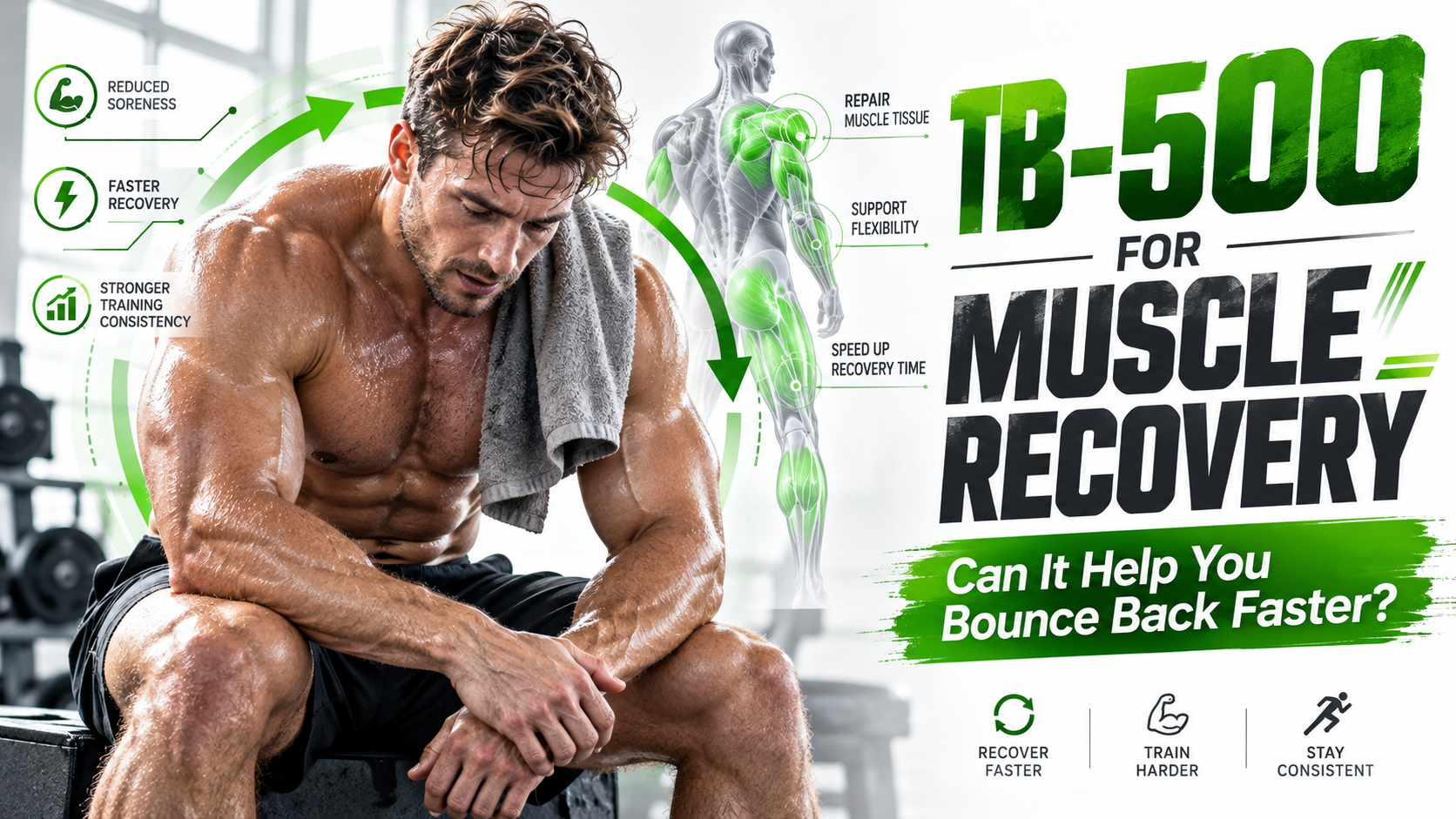
TB-500 for Muscle Recovery: Can It Help You Bounce Back Faster?
Brutal leg day, sore muscles, and a recovery clock that never seems to move fast enough. Enter TB-500, an experimental peptide gaining attention among bodybuilders for its supposed ability to accelerate muscle repair, support tendon healing, and shorten recovery between intense workouts. But can it actually help you bounce back faster? A 2026 review of 80 studies exposed a surprising gap between the hype and the evidence, while animal research revealed an unexpected twist: more regenerating muscle fibers didn't necessarily mean greater strength. Let's explore how TB-500 supposedly works, what the latest research shows, and whether this controversial recovery peptide can deliver real results.
TB-500 for Muscle Recovery: Can It Help You Bounce Back Faster?
Imagine crushing a brutal leg day on Monday, waking up barely able to walk on Tuesday, and feeling completely recovered by Wednesday. That's the kind of promise fueling the hype around TB-500. But does this experimental peptide actually help muscles recover faster—or is the science being stretched further than the muscles it's supposed to repair?
Every serious bodybuilder knows the feeling. You finish an incredible workout. The pump is ridiculous. Your performance is improving. Everything feels exactly the way it should.
Then recovery catches up with you. Your quads are still sore two days later. Your hamstrings feel tight. Your next lower-body session is approaching, but your body hasn't received the memo.
Or maybe the problem is more serious. A muscle strain has interrupted your training. Your shoulder has been bothering you for weeks. A stubborn tendon injury is making even your warm-up sets uncomfortable.
You don't need more motivation. You need your body to recover.
That's why TB-500 has become one of the most talked-about experimental peptides in bodybuilding recovery discussions. It's promoted for muscle repair, tendon healing, soft-tissue recovery, and sometimes even the ability to bounce back faster between demanding workouts.
The theory sounds impressive. But here's the scientific twist: A 2026 review examined 80 studies involving thymosin beta-4 and TB-500. Only one of those studies directly investigated TB-500, and just one study fell into the review's dedicated muscle category.
Meanwhile, a separate experiment involving thymosin beta-4 produced a particularly revealing result: more regenerating muscle fibers, but no measurable improvement in muscle strength.
So what's actually going on? Can TB-500 speed up post-workout recovery? Could it help injured muscles or tendons heal? And how much of its reputation comes from evidence involving a different peptide?
Let's examine what researchers have discovered—and what bodybuilders should know before believing the hype.
What Is TB-500?
TB-500 is a name commonly used for synthetic peptides associated with thymosin beta-4, a naturally occurring molecule involved in several cellular processes.
Thymosin beta-4 has attracted scientific interest because of its relationship with cell movement, actin regulation, inflammation-associated signaling, and tissue remodeling. These biological functions are relevant to the body's response to injury.
That makes thymosin beta-4 an interesting subject for regenerative-medicine research. But TB-500 introduces an important complication.
TB-500 vs. Thymosin Beta-4: The Difference Most People Miss
Full-length thymosin beta-4 contains 43 amino acids. The substance identified by the FDA as TB-500 is a much shorter thymosin beta-4 fragment containing seven amino acids, with the sequence LKKTETQ.
Those are not identical molecules. And this isn't just a technical detail for laboratory scientists. It changes how the evidence should be interpreted.
Much of the research cited to support TB-500's supposed recovery benefits actually involves full-length thymosin beta-4. Researchers may observe interesting effects from that complete molecule. But those effects do not automatically establish that the smaller TB-500 fragment behaves the same way.
Commercial terminology creates further confusion because TB-500 is sometimes used loosely to describe different thymosin beta-4-related products.
The crucial question isn't simply whether thymosin beta-4 influences tissue repair. It's whether the specific substance called TB-500 has been shown to improve recovery in humans. And that's where the evidence becomes much thinner.
Why Is TB-500 So Popular in Bodybuilding?
TB-500 appeals to an enormous fitness problem. Training is only half the equation. Recovery determines how consistently you can train again.
Bodybuilders don't just want to lift heavy today. They want to repeat productive training sessions for months and years. Poor recovery can interfere with that goal.
The Three Recovery Promises Driving the Hype
1. Faster recovery between workouts. The most attractive claim is that TB-500 might help athletes feel ready sooner after demanding training sessions. For someone following a high-volume bodybuilding program, that sounds like a major advantage.
2. Improved muscle repair after injury. TB-500 is also promoted for strained hamstrings, injured quadriceps, pectoral strains, and other muscle injuries. The idea is that influencing repair-related processes could help damaged tissue recover.
3. Better tendon and soft-tissue healing. Tendons often become the limiting factor in consistent strength training. The possibility of accelerating recovery from persistent elbow, shoulder, knee, or Achilles problems makes TB-500 particularly appealing.
But these three claims involve different biological and clinical questions. Ordinary muscle soreness isn't the same as a muscle tear. A muscle tear isn't the same as chronic tendinopathy. And evidence involving one tissue doesn't automatically establish benefits in another.
Before discussing whether TB-500 helps, we need to separate those recovery problems.
Muscle Soreness vs. Muscle Injury: Two Very Different Problems
Imagine two bodybuilders. The first completes an unusually demanding leg workout and develops soreness the following day. The second feels a sudden sharp pain in their hamstring during a heavy movement and struggles to walk normally afterward.
Both may say they're having trouble recovering. But medically, those situations are very different.
Delayed-Onset Muscle Soreness (DOMS)
DOMS commonly develops after unfamiliar or demanding exercise, particularly when movements involve substantial eccentric loading.
Typical symptoms include:
- 1Muscle tenderness.
- 2Stiffness.
- 3Temporary reductions in strength.
- 4Reduced range of motion.
- 5Discomfort during movement.
Symptoms often peak roughly 24–72 hours after the workout, although timing varies. DOMS usually improves as the body recovers and adapts.
A particularly important adaptation is called the repeated-bout effect. After becoming accustomed to a demanding movement, the same exercise often produces less soreness and a smaller disturbance in muscle function.
That means recovery can improve because your body adapts to training—not because you introduce a new compound.
An Actual Muscle Strain
A muscle strain involves injury to muscle tissue. The severity can range from a relatively minor injury to a significant tear.
Recovery depends on factors such as injury location, severity, strength deficits, and the physical demands of the sport. A meaningful strain may require clinical assessment and structured rehabilitation.
This is not the same as waiting for normal post-workout soreness to disappear. And when evaluating TB-500, we need to ask two separate questions: Does it reduce normal post-workout soreness? Does it improve recovery from an actual muscle injury?
Currently, convincing human clinical evidence has not established either benefit.
How Is TB-500 Supposed to Help Muscle Recovery?
The proposed biological rationale comes largely from research on thymosin beta-4. It's genuinely interesting science. But biological plausibility needs to be distinguished from demonstrated athletic performance benefits.
1. Cell Migration and Actin Regulation
Actin is a protein involved in the internal structure and movement of cells. Thymosin beta-4 interacts with actin-related processes, which may influence how certain cells move and participate in tissue remodeling.
Cell movement matters during healing. When tissue is injured, multiple cell populations must coordinate the response. The possibility of influencing those processes has made thymosin beta-4 attractive to researchers.
But a compound affecting cell migration doesn't automatically mean that a bodybuilder will recover faster from squats or deadlifts. And studies of the full-length molecule cannot simply be assigned to the TB-500 fragment.
2. Muscle Regeneration and Myoblast Movement
Skeletal muscles contain specialized cells involved in maintaining and repairing muscle tissue. Muscle satellite cells can contribute to the regeneration of damaged fibers through the production of myogenic cells.
These cells must respond to injury-related signals, move where they're needed, and participate in repair. Research involving thymosin beta-4 suggests that it may influence some of those processes.
For example, investigators studying skeletal muscle regeneration in mice reported that thymosin beta-4 expression increased in injured muscle. They also found that thymosin beta-4 and related forms influenced the migration of muscle precursor cells in laboratory experiments.
That's a plausible biological connection to muscle regeneration. But it doesn't demonstrate that TB-500 accelerates muscle repair in human athletes.
3. Vascular and Tissue-Remodeling Processes
Thymosin beta-4 has also been investigated for effects involving endothelial-cell migration and vascular signaling. Blood vessels help deliver oxygen and nutrients to tissues. They're important in many forms of tissue repair.
That creates another theoretical reason why thymosin beta-4-related compounds attract attention. However, enhanced vascular signaling in an experimental model does not establish faster or better muscle recovery in humans.
It also doesn't prove that broader activity is necessarily beneficial in every context.
4. Inflammation-Related Signaling
Inflammation plays a complicated role in recovery. An appropriate inflammatory response is part of the normal repair process.
Too much or prolonged inflammation can be problematic, but eliminating inflammation entirely isn't the goal of healthy muscle adaptation.
Thymosin beta-4 has been investigated in relation to inflammatory processes. That does not establish that TB-500 safely optimizes exercise-induced inflammation or prevents soreness after training.
The distinction is important because marketing often treats inflammation as something that simply needs to be switched off. Real tissue repair is more complicated than that.
The Muscle Regeneration Study With an Unexpected Result
Here's a study that illustrates why recovery claims need more than impressive-looking biological markers. In 2010, researchers published an experiment investigating thymosin beta-4 in mice with muscular dystrophy.
The animals were genetically deficient in dystrophin, making them a model of Duchenne muscular dystrophy. This is not the same as healthy bodybuilders recovering from resistance exercise. But the experiment directly examined skeletal muscle regeneration and function.
What the Researchers Found
The mice received full-length thymosin beta-4 over a six-month period. Researchers examined muscle tissue and measured functional outcomes, including strength.
One result looked promising. The average number of regenerating skeletal muscle fibers observed in the relevant tissue analysis was:
- 1| Group | Regenerating muscle fibers |
- 2| Untreated dystrophic mice | 2.6 ± 1.1 |
- 3| Thymosin beta-4-treated dystrophic mice | 11.6 ± 13.5 |
The difference reached statistical significance. That looks exciting. But here's the catch.
The treated mice did not show a statistically significant improvement in measured skeletal muscle strength.
The investigators also did not find significant improvements in the muscle fibrosis measurements they examined.
Why This Matters for Bodybuilders
Think about the distinction. Researchers observed a change suggesting greater regeneration at the tissue level. But that change didn't translate into a measurable improvement in strength under the conditions tested.
This is one of the most important lessons in recovery science. More repair-related biological activity does not automatically mean better physical performance.
It is possible for a treatment to influence a cellular marker without producing the outcome an athlete actually wants.
And there's another limitation: this study involved full-length thymosin beta-4, not necessarily the seven-amino-acid TB-500 fragment. It also involved a muscular-dystrophy animal model, not healthy athletes.
So it provides evidence of biological interest, not proof of TB-500's effectiveness for bodybuilding recovery.
The 2026 Review: How Much TB-500 Evidence Actually Exists?
In June 2026, researchers published a scoping review in Applied Sciences examining thymosin beta-4 and TB-500 research. This is particularly important because online discussions often make the evidence sound much larger and more direct than it really is.
The authors searched the literature through March 2026. They identified 1,772 records and ultimately included 80 studies.
That sounds substantial. Until you examine what those studies actually investigated.
Where the Research Was Concentrated
The review classified the studies by tissue or research context.
- 1| Research category | Number of studies |
- 2| Wound, skin, and soft tissue | 22 |
- 3| Vascular and endothelial tissue | 17 |
- 4| Ocular and corneal tissue | 8 |
- 5| Bone | 7 |
- 6| Cartilage | 4 |
- 7| Ligament | 3 |
- 8| Tendon | 2 |
- 9| Muscle | 1 |
The remaining studies involved other or multiple categories. Here's the detail that should make every bodybuilder pay attention.
Only one of the 80 studies was classified in the review's dedicated muscle category. And across the included evidence, just one study directly evaluated TB-500.
Most of the literature investigated full-length thymosin beta-4. That doesn't mean every other study is scientifically irrelevant. It means the amount of direct evidence for the specific fitness claim—TB-500 accelerates muscle recovery—is far smaller than the headline number suggests.
What About the Human Studies?
The review included 19 studies classified as human research. But their presence doesn't establish that TB-500 has been clinically validated.
Much of the human evidence concerned skin wounds or eye-related conditions. Those studies were not controlled trials of bodybuilders experiencing DOMS, returning from muscle strains, or recovering between strength-training sessions.
The review's conclusion was clear: human evidence relevant to musculoskeletal applications remained limited, and direct TB-500 research was minimal.
In bodybuilding terms, there is a big difference between 80 papers in a broad research field and 80 clinical trials showing that a peptide improves athletic recovery. The latter simply doesn't exist.
Does TB-500 Reduce Post-Workout Soreness?
This is probably the most common practical question. You crush legs on Monday. Can TB-500 make Wednesday feel better?
The scientific answer is that no convincing randomized human trial has demonstrated that TB-500 reduces delayed-onset muscle soreness after resistance training.
There is also no established evidence showing that it improves the recovery of muscle strength after a damaging workout.
To demonstrate those effects, researchers would need to study trained people under controlled conditions. They could compare TB-500 with a placebo after standardized exercise and track outcomes such as:
- 1Muscle soreness over subsequent days.
- 2Changes in maximal strength.
- 3Range of motion.
- 4Jump or sprint performance.
- 5Recovery of normal training capacity.
Those kinds of outcomes matter because they measure what athletes actually experience. Laboratory observations about cell migration cannot substitute for them.
Less Soreness Doesn't Always Mean Better Recovery
There's another complication. Even if a future treatment reduces soreness, that doesn't necessarily mean it restores muscle function or improves long-term training adaptations.
Pain and function are related, but they aren't identical. An athlete may feel less uncomfortable while still experiencing reduced strength.
The most useful recovery intervention would need to demonstrate meaningful improvements without introducing unacceptable risks. That standard has not been met for TB-500.
Can TB-500 Help Heal a Torn or Strained Muscle?
A diagnosed muscle injury is a more serious question than ordinary DOMS. Muscle regeneration involves immune responses, satellite-cell activity, tissue remodeling, and the restoration of functional strength.
Research on thymosin beta-4 suggests plausible involvement in some of these processes. But there is no convincing controlled human clinical evidence establishing that TB-500:
- 1Accelerates recovery from hamstring strains.
- 2Repairs pectoral muscle tears.
- 3Improves quadriceps strain healing.
- 4Shortens return-to-training time.
- 5Reduces reinjury risk.
- 6Restores lost muscle strength faster.
These are exactly the outcomes that would matter to injured bodybuilders. And they're precisely the outcomes that remain unproven.
Why Animal Muscle Research Isn't Enough
An experiment involving genetically abnormal mouse muscle can help identify potential repair pathways. A cell-culture experiment can show how certain cells respond to a molecule.
But neither model recreates everything involved in a bodybuilder's recovery. Humans have different tissue loads, injury patterns, training demands, and functional goals.
A compound might alter cellular behavior without meaningfully improving return-to-sport outcomes. That's why clinical trials are essential.
What About TB-500 for Tendon Recovery?
Here's where the evidence takes an interesting turn. Although TB-500's muscle-recovery reputation remains inadequately supported, researchers published a direct experimental tendon study in July 2026.
The study compared BPC-157, TB-500, and their combination in a rat Achilles tendon injury model. It included 32 male rats divided into four groups.
After approximately four weeks, researchers examined the repaired tendons.
The 2026 Achilles Tendon Results
One outcome was maximum load to failure—the amount of force required to break a tendon during mechanical testing. The median results were:
- 1| Treatment group | Median load to failure |
- 2| Control | 26.91 N |
- 3| BPC-157 | 37.16 N |
- 4| TB-500 | 37.41 N |
- 5| BPC-157 + TB-500 | 34.54 N |
The TB-500 group demonstrated a statistically significant improvement compared with the control group in the adjusted biomechanical analysis. The study also reported improvements in certain histological measurements of tendon structure.
Those findings are scientifically interesting. But several limitations matter.
- 1First: These were rat tendons, not human tendons.
- 2Second: Only four tendons per group were used for biomechanical testing.
- 3Third: The study examined surgically repaired Achilles tendons, not muscle soreness, bodybuilding-related muscle strains, or chronic tendinopathy.
- 4Fourth: The paper's experimental peptide terminology should not be treated as proof that all products marketed as TB-500 have the same molecular identity or effects.
And finally, the combination with BPC-157 did not demonstrate additional benefit over the individual compounds.
What This Study Actually Tells Us
It provides a reason to investigate particular thymosin-related compounds further in tendon-repair research. It does not establish that TB-500 helps humans recover faster.
And it certainly doesn't prove that TB-500 makes muscles recover between workouts. Promising tendon data are not muscle-recovery data.
That difference is easy to lose when all forms of tissue repair are marketed under one umbrella.
But Didn't Thymosin Beta-4 Work in Human Trials?
Some human studies have investigated full-length thymosin beta-4. For example, a randomized, double-blind, placebo-controlled Phase 2 study enrolled 73 patients with venous stasis ulcers.
The researchers evaluated a topical thymosin beta-4 treatment and reported results suggesting potential wound-healing activity at a particular concentration. The treatment's observed safety profile in that setting was considered comparable to placebo.
That sounds encouraging. But consider what the experiment actually involved. The participants had chronic skin ulcers. The compound was full-length thymosin beta-4. The treatment was applied topically. And the outcomes concerned skin wound healing.
The study did not investigate the shorter TB-500 fragment. It did not test skeletal muscle recovery. And it did not demonstrate improved performance after training.
A human wound-healing study is not automatically a human muscle-recovery study. That's the distinction that separates evidence-based interpretation from marketing.
TB-500 Recovery Claims: The Evidence Scorecard
Let's compare the biggest claims with what has actually been demonstrated.
- 1| TB-500 recovery claim | Scientific status |
- 2| Reduces DOMS after heavy workouts | Not demonstrated in controlled human studies |
- 3| Restores strength faster after training | Not demonstrated |
- 4| Helps muscle strains heal | Biologically interesting thymosin beta-4 research; no proven human TB-500 benefit |
- 5| Supports muscle regeneration | Preclinical findings mainly involving full-length thymosin beta-4 |
- 6| Accelerates tendon repair | Exploratory 2026 rat study; no established human benefit |
- 7| Improves recovery between bodybuilding sessions | Not demonstrated |
- 8| Supports broader tissue-repair mechanisms | Plausible based on related research, but fragment-specific effects remain uncertain |
- 9| Improves muscle growth | No convincing human evidence |
- 10| Prevents reinjury | Not demonstrated |
- 11| Has established long-term safety | No |
That doesn't mean every recovery-related hypothesis is false. It means the claims have developed much faster than the clinical evidence.
Could TB-500 Help You Train More Often?
This is where recovery research connects directly to muscle growth. Bodybuilders often imagine a simple chain of events: Faster recovery → more frequent training → more muscle growth.
It sounds reasonable. But every part of that chain needs to be tested.
Faster Recovery Is Only Useful If Function Actually Improves
Suppose someone feels less sore after a hard workout. Can they produce more force during their next session? Can they complete the same training volume with better performance? Does the change persist over several weeks? And does the increased training actually produce more muscle?
Those are the questions that matter. TB-500 has not been shown in controlled human studies to improve those outcomes.
More Training Isn't Always Better
Even with excellent recovery, training volume eventually reaches a point where adding more work produces diminishing returns.
Productive bodybuilding requires an appropriate balance between training stimulus and recovery capacity. Trying to accelerate recovery through an unproven compound does not automatically improve that balance.
And there's no convincing evidence that TB-500 increases muscle protein synthesis, hypertrophy, or strength development in human lifters.
A peptide being associated with tissue repair doesn't make it a proven muscle-building compound.
Why Some Lifters Might Believe TB-500 Works
This is worth discussing because personal recovery stories can be compelling. Imagine a lifter dealing with persistent soreness and an irritated tendon.
They decide to try TB-500. At the same time, they reduce training volume, stop performing painful movements, improve sleep, and give themselves additional recovery time.
Three weeks later, they feel better. They attribute the improvement to TB-500. But what actually caused it?
There are several possibilities. The injury may have improved naturally. The reduction in training stress may have helped. The person may have benefited from a more appropriate exercise program. Expectations may have influenced the way they perceived pain. Or the experimental compound may have had some biological effect.
Without controlled data, we cannot confidently separate those explanations. Anecdotes can generate hypotheses. They cannot reliably establish treatment effectiveness.
Is TB-500 Safe for Muscle Recovery?
One of the biggest problems with TB-500 isn't simply that its benefits are unproven. It's that its safety has not been adequately characterized for human athletic use.
Human Safety Data Are Insufficient
The FDA has identified potential concerns involving the thymosin beta-4 fragment LKKTETQ, also known as TB-500.
Its published safety discussion includes concerns about possible immunogenicity for certain routes of administration, peptide aggregation, and peptide-related impurities.
The agency also states that it has not identified human exposure data for drug products containing that fragment. That's a serious evidence gap.
It means researchers lack important information needed to determine whether exposure could cause harm.
Product Purity and Identity Are Additional Concerns
Products sold as research peptides may have problems involving quality, identity, or contamination.
For TB-500, inconsistent commercial terminology adds further uncertainty. A seller using the name TB-500 doesn't necessarily establish that the product matches the molecule used in a particular research study.
And even a correctly identified compound is not automatically safe for human use.
What About Long-Term Effects?
Researchers have investigated thymosin beta-4 in connection with cell migration, vascular signaling, and other biologically important pathways. Those functions make it scientifically interesting.
But they also reinforce the need for careful safety assessment. It would be misleading to assert that TB-500 has been proven to cause a particular serious disease in humans without evidence.
It would be equally misleading to claim it has been proven safe over years of use. The accurate conclusion is that comprehensive long-term human safety data are missing.
Is TB-500 Legal or Banned in Bodybuilding?
TB-500 is not an FDA-approved medication for human muscle or tendon recovery. Regulatory discussions concerning compounding should not be confused with approval or demonstrated effectiveness.
For competitive athletes, there is also an anti-doping issue. Under the 2026 World Anti-Doping Agency Prohibited List, thymosin beta-4 and its derivatives, including TB-500, are prohibited.
That prohibition applies to athletes subject to the relevant anti-doping rules. For tested bodybuilders, the potential consequences involve eligibility as well as health uncertainty.
What Actually Helps Muscle Recovery After Heavy Training?
Here's where the discussion becomes practical. Unlike TB-500's speculative athletic-recovery benefits, several recovery principles have substantial human evidence behind them.
They aren't guaranteed to prevent soreness or eliminate every injury. But they address problems bodybuilders can actually measure and manage.
1. Keep Training Volume Recoverable
If you're still noticeably underperforming when a muscle group comes around again, examine your training program.
Was the session unusually demanding? Did you introduce unfamiliar exercises? Did you dramatically increase eccentric loading? Are you consistently training beyond what you can recover from?
Appropriate programming matters. The goal isn't to avoid hard training. It's to use enough training stress to stimulate adaptation without creating unnecessary fatigue that disrupts subsequent sessions.
2. Eat Enough Protein
Protein provides amino acids involved in muscle protein synthesis and repair.
The International Society of Sports Nutrition has recommended approximately 1.4–2.0 grams of protein per kilogram of body weight per day for most exercising individuals, with circumstances such as energy restriction potentially changing individual requirements.
That doesn't mean consuming more protein will cure a muscle strain. It means adequate protein intake has direct relevance to the adaptation and recovery processes bodybuilders care about.
3. Don't Neglect Total Energy Intake
A bodybuilder in an aggressive calorie deficit may experience greater difficulty recovering from demanding training. Energy availability matters.
Training, tissue maintenance, and recovery all impose demands on the body. Nutrition strategies should match the athlete's goals and recovery needs.
4. Make Sleep a Priority
Poor sleep can interfere with training readiness and the ability to sustain demanding exercise programs. Consistent sleep habits are a practical part of any recovery strategy.
No experimental peptide should be viewed as a substitute for chronically inadequate sleep.
5. Use Progressive Rehabilitation for Actual Injuries
When a muscle is injured, the answer isn't always complete rest. It also isn't immediately returning to maximum loading.
Rehabilitation should account for the specific muscle, severity of injury, symptoms, strength, and sporting demands.
A 2023 international consensus on hamstring injuries emphasized individualized rehabilitation, appropriate exercise loading, and progression based on function and symptoms.
Those principles have a direct connection to safe return to sport. TB-500 has not been shown to replace them.
When Is Muscle Soreness More Than Normal Recovery?
This is especially important for lifters who are tempted to treat every problem as ordinary post-workout damage. Typical DOMS develops after exercise and generally improves over time.
A muscle injury may involve sudden pain during training, significant weakness, bruising, swelling, or a clear loss of function.
Severe muscle pain accompanied by marked swelling, unusual weakness, or dark urine needs prompt medical assessment because serious muscle breakdown is possible.
Persistent or recurrent pain also deserves proper evaluation rather than repeated attempts to train through it. The goal is to identify the actual problem. Not simply find a compound marketed for recovery.
The Real Question: What Would Prove TB-500 Works?
For TB-500 to become an evidence-based muscle-recovery treatment, researchers would need well-designed human studies involving a chemically defined compound.
For ordinary post-workout recovery, a trial could compare TB-500 and placebo after a standardized resistance-training session. Researchers would need to measure soreness, strength, function, adverse events, and recovery over time.
For actual muscle injuries, they would need controlled trials involving clearly diagnosed injuries, appropriate rehabilitation, and meaningful return-to-activity outcomes.
Ideally, research would also determine:
- 1Whether the exact TB-500 fragment reproduces effects attributed to thymosin beta-4.
- 2Whether any observed benefits are large enough to matter clinically.
- 3Whether improvements persist beyond short-term symptom changes.
- 4Whether the compound affects reinjury risk.
- 5Whether long-term exposure is acceptably safe.
Until those questions are answered, the evidence cannot support confident promises about faster recovery.
Final Verdict: Can TB-500 Help You Bounce Back Faster?
Here's where the science stands. TB-500 is one of bodybuilding's most interesting recovery-peptide concepts—but it is not a proven muscle-recovery treatment.
The enthusiasm has a biological foundation. Research on full-length thymosin beta-4 suggests that it participates in cell migration, tissue remodeling, and certain muscle-regeneration processes.
One experiment in dystrophic mice even found an increase in regenerating muscle fibers. But the same experiment did not demonstrate improved muscle strength.
The 2026 scoping review exposed just how limited the direct evidence remains: 80 included studies, a heavy emphasis on thymosin beta-4 rather than TB-500, and very little research focused specifically on muscle.
And the 2026 rat Achilles study, while interesting for tendon repair, doesn't prove that TB-500 helps people recover from leg day, muscle strains, or heavy training blocks.
The biggest unanswered questions remain unanswered.
- 1Does TB-500 reduce post-workout soreness? Not demonstrated.
- 2Does it help muscles regain strength faster? Not demonstrated.
- 3Does it shorten recovery from human muscle injuries? Not demonstrated.
- 4Is it safe for long-term bodybuilding use? Not established.
Could future studies reveal useful applications? Possibly. But promising mechanisms are not the same as proven outcomes.
The TB-500 Recovery Scorecard
- 1| Category | Verdict |
- 2| Biological interest in muscle repair | Yes, mainly from thymosin beta-4 research |
- 3| Direct human TB-500 muscle-recovery evidence | Extremely limited |
- 4| Proven faster DOMS recovery | No |
- 5| Proven faster muscle-strain healing | No |
- 6| Proven faster return to heavy lifting | No |
- 7| Experimental tendon-repair signal | Yes, in a small 2026 rat study |
- 8| Established long-term safety | No |
- 9| Evidence-based bodybuilding recovery treatment | Not established |
Final verdict: Exciting biology. Serious evidence gaps. No proven shortcut to recovery.
The dream of recovering from every brutal workout almost overnight is easy to understand. But bodybuilders don't just need muscles that feel ready.
They need muscles that can produce force, tolerate training, and keep improving. And until TB-500 demonstrates those benefits in humans, its reputation remains bigger than the evidence.
The real recovery advantage isn't how quickly you can walk after leg day. It's how consistently you can train hard, recover properly, and come back stronger.
Frequently Asked Questions
There is no convincing controlled human clinical evidence demonstrating that TB-500 accelerates muscle recovery after exercise. Some preclinical research involving full-length thymosin beta-4 suggests effects on muscle-regeneration-related pathways, but those results do not establish effectiveness for TB-500 in bodybuilders.
No reliable randomized human trial has established that TB-500 reduces DOMS after weight training. Muscle soreness often improves naturally as athletes recover and adapt to exercise, making controlled studies necessary to determine whether a treatment has an additional effect.
TB-500 has not been shown in controlled human trials to accelerate healing of hamstring, pectoral, quadriceps, or other muscle strains. Its potential relationship with tissue-repair pathways remains an experimental research question rather than a proven clinical treatment.
A 2026 rat Achilles tendon study reported a statistically significant improvement in one biomechanical outcome for the TB-500 treatment group compared with controls. However, the study was small, involved animals, and does not prove improved tendon healing in human athletes.
Not necessarily. Full-length thymosin beta-4 contains 43 amino acids, while the FDA identifies TB-500 as a seven-amino-acid thymosin beta-4 fragment with the sequence LKKTETQ. Commercial terminology is sometimes inconsistent, so findings from one form cannot automatically be applied to another.
There is no convincing human clinical evidence demonstrating that TB-500 increases muscle hypertrophy, strength, or muscle protein synthesis in bodybuilders. Research involving tissue-repair pathways should not be interpreted as evidence of a muscle-building effect.
Its safety has not been adequately established. The FDA has identified potential concerns involving immunogenicity, peptide-related impurities, and insufficient human exposure data for the relevant TB-500 fragment. Long-term risks remain uncertain, and products marketed online may introduce additional quality concerns.
TB-500 is not FDA-approved for human muscle or tendon recovery. Thymosin beta-4 and derivatives, including TB-500, are prohibited under the applicable World Anti-Doping Agency rules, so tested athletes may face anti-doping consequences.
Research and Sources
- 1McGuire F, Hughes E, Maak T, Cushman DM. (2026). Thymosin Beta-4 and TB-500 in Tissue Healing, Regeneration, and Musculoskeletal Repair: A Scoping Review. Applied Sciences, 16(12), 6202. https://doi.org/10.3390/app16126202
- 2Biçer O, et al. (2026). Effects of BPC-157 and TB-500 on Achilles Tendon Healing in Rats: A Histopathological and Biomechanical Study. Joint Diseases and Related Surgery. https://pubmed.ncbi.nlm.nih.gov/42542926/
- 3Spurney CF, et al. (2010). Evaluation of Skeletal and Cardiac Muscle Function after Chronic Administration of Thymosin β-4 in the Dystrophin Deficient Mouse. PLOS ONE, 5(1), e8976. https://doi.org/10.1371/journal.pone.0008976
- 4Toda M, et al. (2010). Muscle Injury-Induced Thymosin β4 Acts as a Chemoattractant for Myoblasts. Journal of Biochemistry. https://pubmed.ncbi.nlm.nih.gov/20880960/
- 5Guarnera G, et al. (2010). The Effect of Thymosin Treatment of Venous Ulcers. Annals of the New York Academy of Sciences. https://pubmed.ncbi.nlm.nih.gov/20536470/
- 6Doma K, et al. (2023). The Repeated Bout Effect of Multiarticular Exercises on Muscle Damage Markers and Physical Performances: A Systematic Review and Meta-Analyses. Journal of Strength and Conditioning Research. https://pubmed.ncbi.nlm.nih.gov/38015738/
- 7Jäger R, et al. (2017). International Society of Sports Nutrition Position Stand: Protein and Exercise. Journal of the International Society of Sports Nutrition, 14, 20. https://pubmed.ncbi.nlm.nih.gov/28642676/
- 8London International Consensus and Delphi Study (2023). Hamstring Injuries Part 3: Rehabilitation, Running and Return to Sport. British Journal of Sports Medicine. https://pubmed.ncbi.nlm.nih.gov/36650032/
- 9American College of Sports Medicine. Delayed-Onset Muscle Soreness (DOMS). https://www.acsm.org/docs/default-source/files-for-resource-library/delayed-onset-muscle-soreness-%28doms%29.pdf
- 10U.S. Food and Drug Administration. Certain Bulk Drug Substances for Use in Compounding That May Present Significant Safety Risks. https://www.fda.gov/drugs/human-drug-compounding/certain-bulk-drug-substances-use-compounding-may-present-significant-safety-risks
- 11Sport Integrity Australia. Thymosin Beta-4: Substance Information and Anti-Doping Status. https://www.sportintegrity.gov.au/what-we-do/anti-doping/substance-education/thymosin-beta-4
Research status: October 8, 2026. This article is educational and does not recommend TB-500 as a treatment. Its clinical effectiveness and long-term safety for bodybuilding recovery have not been established.
Dr. Andrii Kaleniuk
Comments (0)
Be the first to comment on this article.
